
Your biggest fan
Some thoughts about saying goodbye to Hacks

Hacks just ended its five-season run. I’m gonna miss it. As a longtime fan of backstage musicals and workplace comedies, I have a lot of affection for television shows that find the funny in people who can’t take a day off. But Hacks wasn’t just a television show about people who make television. It was a show about female authorship. Veteran comedian Deborah Vance (Jean Smart) navigated a shifting cultural landscape with queer Zennial comedy writer Ava Daniels (Hannah Einbinder), who she hired to keep herself from languishing in Vegas. To that end, it was also a show about female mentorship—how women share wisdom and experience with each other, if they’re able to receive it. Deb teaches Ava how to set up a punch line and swim with the sharks. Ava teaches Deb the difference between punching up and punching down.
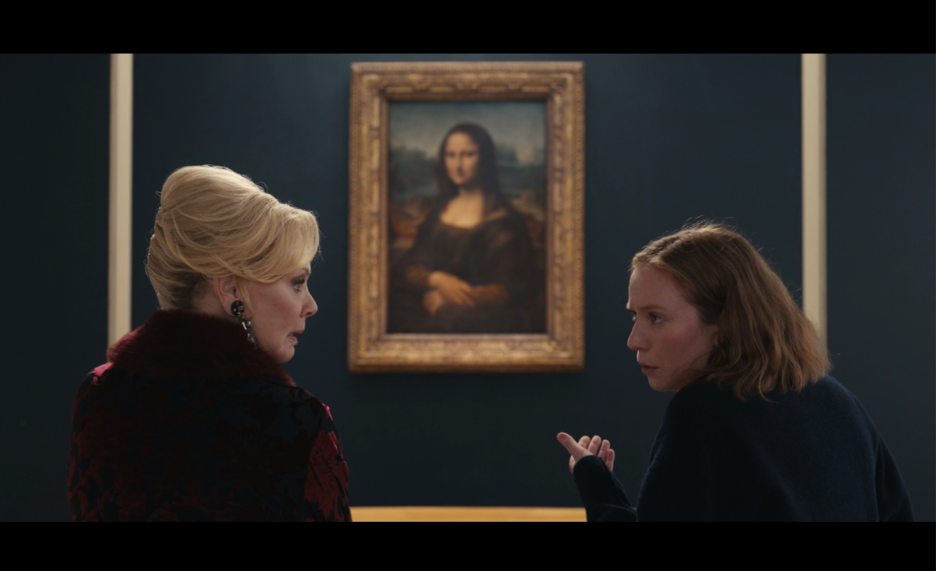
It’s still pretty rare to see women teach each other how to do something on screen, much less try to reckon with how they clash over how they’ve been shaped by different circumstances. In his Letterboxd review of The Devil Wears Prada 2, my buddy Landon made an astute observation about the legacy sequel’s inability to interrogate the characters’ intergenerational work ethic by noting that, “[a]fter floating to her husband the possibility of retiring, the septuagenarian EIC asserts to her employee—who, at fortysomething, is still hustling for stable employment—that she simply loves to work, then asks rhetorically, ‘don’t you,’ as if ‘work’ meant the same to both of them.” Hacks examined how work meant different things to Deb and Ava. Deb has everything, but wants to keep going. Ava is just getting started, but has fewer opportunities to express herself in a consolidated media landscape. One of Hacks’ great strengths as a feat of comedy writing and acting chemistry was its ability to get you to identify with both characters. As an old-school entertainer, Deb has been conditioned to succeed by being the “cool girl” in a wood-paneled room full of men. She fixates on her appearance and status to the detriment of her relationship with her daughter, DJ (Kaitlin Olson). She’s defensive about cancel culture and iffy about anyone under the rainbow flag who isn’t a gay man. Ava wants to use comedy to tear down the boy’s club. She’s a bi, politically principled, chronic oversharer. She honed her observational humor to get through an unstable childhood with her mom, Nina (Jane Adams), and now uses work as an anchor.
It’s electrifying when Deb and Ava’s parallel tracks meet. In season five’s “QuikScribbl,” Deb considers signing over her jokes to an AI company against Ava’s vehement objections. Ava notes that large language models are bad for the environment and threaten writers’ livelihoods. Deb reasons that the “good” writers will survive, until she learns that AI is coming for her too. It’s also exciting to see how they make sense of each other’s differences. In particular, Deb often had to confront her own prejudices against bisexuality and queer femininity while mentoring Ava. The last season highlight for me was “Montecito,” where Deb tries to pass Ava off as her girlfriend to a professional rival who has a white pantsuit that used to belong to Carol Burnett. They spend the weekend recasting their combative professional dynamic as erotic passion, with Ava getting increasingly explicit to make Deb squirm and to ingratiate herself with Kelly (Cherry Jones) and her girlfriend Monica (Leslie Bibb, having a blast). “Montecito” joins the ranks of The Simpsons’ “Homer’s Phobia” and Frasier’s “The Matchmaker” as masterful gay farce that expands sitcom’s capacity to find the humor in polycules and May-December lesbian couples.
I also love how “Montecito” plays with the series’ queer subtext. Ava and Deb fight like lovers. But Deb is a straight Boomer who needs men to see her as desirable. In (too) much of the fourth season, Ava and Deb fight through their stint on late-night television. But there’s a great moment in “Clickable Face” when Deb runs into Ava on a date with married couple Emily (Medalion Rahimi) and Dev (Alexander Koch). She seems surprised and genuinely hurt that she’s out of the loop on Ava’s love life, and in over her head about their configuration. She tries to pull rank by paying for their meal and making several tired jokes about threesomes. But they’re not having it; they’re out and proud and they don’t watch her show. In the second episode, Ava tells Deb:
“I used to only hook up with men, but when I masturbated I thought about women. So then in college, I finally hooked up with this amazing TA, Phoebe. And I realized I could connect more emotionally with women which led to deeper sexual experiences. But sometimes I do still need penetrative sex with a dick to come. But, I don’t know, maybe I was just conditioned by the porn that was fed to me by the algorithm, you know? So anyway, I’m bi.”
As a bisexual woman, I don’t know if I’ve ever heard a television character articulate the porous capacities for our identity so clearly. I like how thoughtful Hacks was about its lead characters’ sexualities. Ava put herself out there, but risked a stable relationship with actress Ruby (Lorenza Izzo) for her career and regretted it. Deb preferred fuck buddies and boy toys after getting divorced. She wasn’t above leveraging her sexuality to get what she wanted, perhaps most perilously with executive Bob Lipka (Tony Goldwyn), whose parent company owns Deb’s talk show. I actually wish the show spent more time on Ava and Deb’s romantic lives. Deb’s on-and-off situationship with casino impresario Marty Ghilain (Christopher McDonald) crackled with untapped sexual chemistry. I get it; work ultimately lights these women up. But sometimes it felt like the show missed an opportunity to let us understand how their desires fueled their comedic sensibilities and how they used humor to make sense of their differences as women. One way that Hacks felt old-school, sometimes to its detriment, was how it threw in a bunch of “colorful characters” to flesh out Deb and Ava’s world and raise the stakes with various hijinks and schemes. For example, I never fully clicked with Meg Stalter’s performance as Kayla, a nepo baby talent agent. Hacks is single-cam, but Stalter has her own laugh track. She made more sense playing off Randi (Robby Hoffman), a resourceful assistant who joined the cast in its fourth season and became the Newman to her Kramer. But I was there for Ava and Deb.
I also watched Hacks because I miss my mom. She was a bit of a Deb—ambitious, impervious, fabulous. My childhood coincided with a watershed period for TV moms who liked to work, or had to: Clair Huxtable from The Cosby Show, Roseanne, Murphy Brown. I watched all of these shows with my mom, who ran her own graphic design firm until she went back to teaching to make ends meet. She held a special place in her heart for Designing Women, a sitcom about a group of Southern belles who run an interior design firm in Atlanta. Mom saw herself in Julia (Dixie Carter), the no-nonsense president of Sugarbaker & Associates. I identified with Mary Jo (Annie Potts), Julia’s sarcastic wingman. Smart played Charlene, the firm’s naïve secretary. Mom would’ve enjoying seeing her go full Julia Sugarbaker. Dame respect dame. In the last season, I saw my mom in Deb’s struggle to be a person with cancer, and I saw myself in Ava’s struggle to accept her admission of defeat. I wish we gotten to take a stroll through the Louvre together. So I’m glad Deb found another hour in her. I’d happily watch a Hacks comedy special.
As the star of Hacks, Smart racked up a shelf full of Emmys. She’s certainly earned the acclaim as a veteran television performer. But I also suspect that the Television Academy gave her the gold because their industry is mourning the end of an era. Hacks went off the air a week after CBS bid farewell to Stephen Colbert and The Late Show because the Ellisons don’t want to lose money on Trump jokes. Hacks’ penultimate season predicted such upheaval to this vestige of the broadcast model by finally letting Vance host a late-night talk show before taking it away from her. Perhaps “predicted” is overstating it; co-creator Jen Statsky cut her teeth as a staff writer on Late Night with Jimmy Fallon and we all saw what TBS did to Samantha Bee. One way they tried to pay it forward was by hiring several young comedians as writers and performers. It also had a great old-school soundtrack. Music supervisor Matt Biffa studded episodes with 70s soul and pop divas as sonic shorthand for Deb’s identity as a seasoned professional who helped destigmatize the Vegas residency for entertainers. The series ended masterfully with Ava and Deb walking through Paris before returning to Vegas, arm in arm and doubled over to Judy and Barbra’s “Come Rain or Come Shine.” It’s how I’ll choose to remember them.